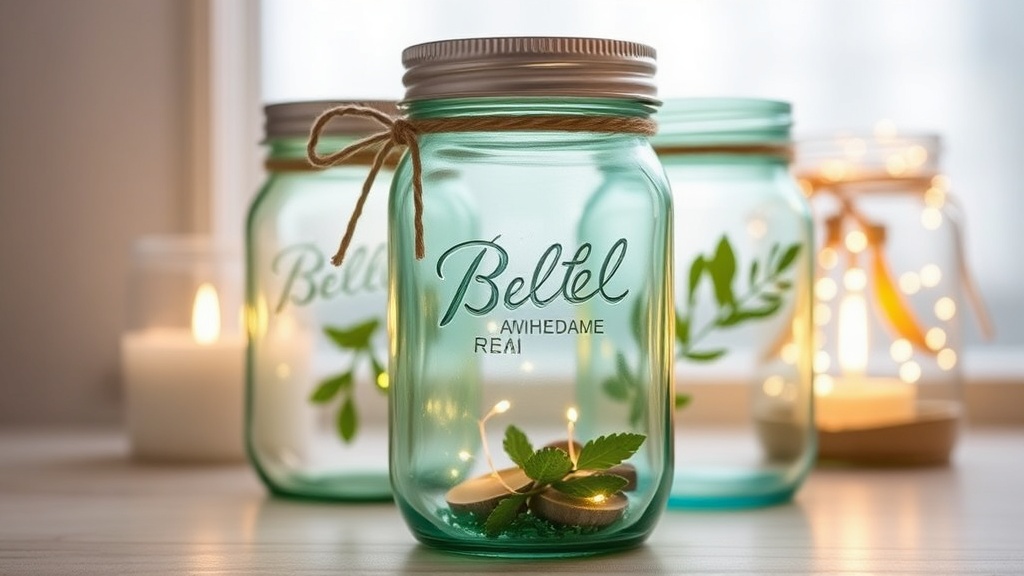
10 Creative Mason Jar Crafts to Transform Your Home Decor

Painted Ombre Vases
Hanging Herb Garden Jars
Glitter Dipped Storage Containers
Fairy Light Lanterns
Chalkboard Label Pantry Organizers
Mason jars have evolved far beyond their canning origins into versatile DIY staples that can transform any room in your home. This post covers ten distinct mason jar craft projects—from functional storage solutions to decorative centerpieces—each designed to add personality and charm to your living space without breaking the bank. Whether you're a seasoned crafter or just starting out, these projects use affordable materials (most under $20) and require minimal specialized tools.
What Can You Make with Mason Jars for Home Decor?
You can create everything from bathroom organizers to kitchen herb gardens, pendant lighting to seasonal centerpieces. The clear glass construction makes mason jars perfect for displaying contents while the threaded lids allow for endless customization options.
The Michaels craft store chain reports that mason jar crafts remain their top-selling DIY category year after year. That staying power comes down to simplicity—most projects need only basic supplies like acrylic paint, twine, hot glue, and your imagination.
1. Floating Wall-Mounted Bathroom Organizers
Transform plain pint jars into sleek bathroom storage by mounting them on reclaimed wood planks. You'll need: Ball Mason pint jars (the gold standard—avoid off-brand jars with inconsistent threading), stainless steel hose clamps, wood boards cut to size, and wall anchors rated for your load.
Sand the wood thoroughly, stain or paint it in your chosen finish, then attach the hose clamps using short screws. The jars slide in and out for easy cleaning—a practical touch many tutorials skip.
Here's the thing: humidity matters in bathrooms. Seal your wood with polyurethane (three coats minimum) or it'll warp within months. For a coastal vibe, use weathered driftwood from a local beach or purchase pre-weathered boards from Home Depot's decorative lumber section.
2. Mason Jar Herb Garden for Kitchen Windowsills
Create a thriving indoor herb garden using quart-sized Mason jars and a simple hydroponic setup. The jars become self-watering planters when paired with net cups and clay pebbles—available from hydroponic suppliers like Amazon's Garden Section.
Drill holes in the jar lids for net cup insertion, fill with nutrient solution (General Hydroponics Flora Series works well), and plant basil, cilantro, or parsley. The clear glass lets you monitor water levels and root health at a glance.
Worth noting: herbs need 6+ hours of direct sunlight. A south-facing window works best, but consider a Barrina LED grow light strip ($25 on Amazon) for darker kitchens. Mint and chives tolerate lower light—start with those if your window situation is less than ideal.
3. Industrial-Style Pendant Lighting Fixtures
Quart jars convert beautifully into pendant lights for kitchen islands or dining areas. You'll need pendant light kits (the Globe Electric 64405 kit costs around $12 at Lowe's), drill bits for glass, and patience.
The process requires drilling a hole through the jar lid's center for the light socket to pass through. Use diamond-tipped drill bits and work slowly under running water—glass cracks from heat buildup, not pressure. Wear safety glasses. Seriously.
The catch? Standard incandescent bulbs get hot enough to crack glass. Stick with LED bulbs maxing out at 40W equivalent, and never exceed 60W. Edison-style LED filaments look spectacular through clear glass and run cool enough for safety.
4. Rustic Chalkboard-Labeled Pantry Storage
Uniform rows of labeled mason jars transform chaotic pantries into Instagram-worthy storage spaces. Wide-mouth quarts hold flour and sugar; pints handle spices; half-pints work for specialty items like saffron or vanilla beans.
Apply chalkboard paint to the jar sides or lids using painter's tape for clean edges. Rust-Oleum Chalkboard Spray applies evenly, though chalk markers (vs. traditional chalk) produce sharper labels that don't smudge when you grab the jar.
That said, chalkboard paint scratches eventually. For a more durable option, apply printable waterproof labels from OnlineLabels.com and seal with clear acrylic spray. These survive hand-washing and repainting when you want to reuse the jar.
Which Mason Jar Size Works Best for Different Projects?
Size selection depends on function: pints suit single-serving projects and small storage, quarts handle bulk storage and larger plantings, while half-gallon jars work for statement centerpieces and large-scale lighting fixtures.
| Jar Size | Best Uses | Approximate Capacity |
|---|---|---|
| 4 oz (Jelly) | Spices, party favors, candles | 1/2 cup |
| 8 oz (Half Pint) | Salad dressing storage, small planters | 1 cup |
| 16 oz (Pint) | Drinking glasses, bathroom storage | 2 cups |
| 32 oz (Quart) | Flour/sugar storage, pendant lights, herb gardens | 4 cups |
| 64 oz (Half Gallon) | Centerpieces, large terrariums, utensil holders | 8 cups |
Ball and Kerr dominate the mason jar market for good reason—their threading standards have remained consistent for decades. Generic dollar-store jars often feature irregular threads that leak or lids that don't seal properly. Spend the extra dollar per jar for reliability.
5. Layered Sand Art Centerpieces
Create striking tabletop decor by layering colored sands inside clear quart jars. This project works beautifully for events—weddings, baby showers, or seasonal gatherings—and costs roughly $8 per completed piece.
Source sand from ACTÍVA Products (their Scenic Sand line offers 28 colors), or collect natural sands from beach vacations for personal meaning. Use a funnel and wooden skewer to create patterns: tilt the jar while pouring for diagonal layers, or drag the skewer through set layers for feathered effects.
Seal the lid with hot glue if you want permanent art, or leave it removable to change designs seasonally. Add battery-operated fairy lights (the copper wire ones from Brightown work perfectly) for evening ambiance.
6. Hanging Tea Light Lanterns
Half-pint jars suspended from tree branches or porch ceilings create magical outdoor lighting. Wrap jar necks with galvanized wire (18-gauge from the hardware store), forming handles for hanging.
Use real tea lights for special occasions, but switch to LED alternatives (Homemory makes convincing flickering versions) for regular use—they're safer, last longer, and won't leave soot on your glass. For extra charm, Mod Podge lace doilies or pressed leaves onto the exterior—the light filters through creating beautiful shadow patterns.
Philadelphia's Rittenhouse Square hosts evening markets where local artisans sell similar lanterns for $15-25 each. DIY costs under $3 per piece with materials from JOANN Fabric and Craft Stores.
7. Magnetic Spice Jars for Refrigerator Storage
Convert 4-ounce jelly jars into space-saving magnetic spice storage for small kitchens. Spray the lids with Rust-Oleum magnetic primer (two coats), then paint to match your kitchen's color scheme.
Fill jars with spices from bulk bins at Whole Foods or local co-ops—significantly cheaper than pre-jarred spices. Label lids clearly (sharpie on masking tape works temporarily; engraved labels look professional). The magnetic hold supports full jars, but test your refrigerator's magnet strength first—not all stainless steel fridges are actually magnetic.
Here's the thing: light degrades spices. Store these on the refrigerator side, not the door where light hits when opened, or use amber-tinted Ball jars for UV protection. Replace spices every 6-12 months for optimal flavor—old turmeric tastes like nothing.
8. Painted Distressed Vases for Farmhouse Style
Achieve the popular distressed farmhouse look using chalk paint and sandpaper. Paint clean jars with Annie Sloan Chalk Paint (Old White and Country Grey sell best) or budget-friendly Waverly chalk paint from Walmart.
Apply one coat, let dry completely, then sand edges and raised areas where natural wear would occur. The glass beneath catches light beautifully. Seal with clear wax for durability, especially if you'll handle the jars frequently.
Fill with eucalyptus stems (available from Trader Joe's for $3 per bunch), dried lavender, or cotton branches for year-round display. This technique works particularly well for wedding centerpieces—uniform painted jars with varied distressing create cohesive-yet-individual table settings.
9. Sewing and Craft Supply Organization
Wide-mouth quart jars store buttons, beads, ribbons, and thread spools with perfect visibility. Screw jar lids to the underside of shelves, then twist jars into place—instant hidden storage that keeps supplies dust-free and accessible.
For thread storage specifically, insert cardboard tubes (from paper towel rolls, cut to size) standing upright inside quarts. Spools slide onto the tubes, preventing tangling while keeping everything visible. Add a layer of batting to the jar bottom so thread spools stay put when you unscrew the jar.
Worth noting: direct sunlight fades thread colors. Store these on interior shelves or in cabinets, not windowsills, unless you're using UV-blocking glass paint on the jar exteriors.
What Supplies Do You Need to Start Mason Jar Crafting?
Begin with basic supplies totaling under $50: various jar sizes (buy assorted packs at Walmart for best value), a hot glue gun (Surebonder Mini works fine), acrylic paints, twine or jute rope, sandpaper in multiple grits, and Mod Podge for decoupage projects.
Specialized tools expand your options: diamond drill bits for lighting projects ($10-15 sets on Amazon), glass etching cream (Armour Etch is the standard), and chalkboard paint. Build your collection gradually as projects interest you—no need to buy everything at once.
10. Seasonal Terrariums for Year-Round Decor
Quart jars make perfect miniature ecosystems. Layer activated charcoal (prevents mold), pebbles, potting soil, and small plants like succulents or air plants. The enclosed environment creates a humidity cycle—water lightly every 2-3 weeks depending on plant selection.
Rotate themes seasonally: spring moss gardens with miniature figurines, summer succulent arrangements, autumn displays with preserved leaves and tiny pumpkins, winter scenes with faux snow and pine sprigs. The jar becomes a living—or realistically faux—art piece that changes with your mood.
That said, succulents in closed jars eventually rot. Use open containers (no lid) for succulent terrariums, or switch to humidity-loving plants like small ferns and baby's tears if you want sealed environments. Moss terrariums thrive in closed jars indefinitely with minimal care.
These ten projects represent just the beginning of what's possible with mason jars. Start with one that matches your skill level and available time—most require under two hours from gathering supplies to finished piece. The satisfaction of creating functional, beautiful home decor from simple glass jars never really gets old.