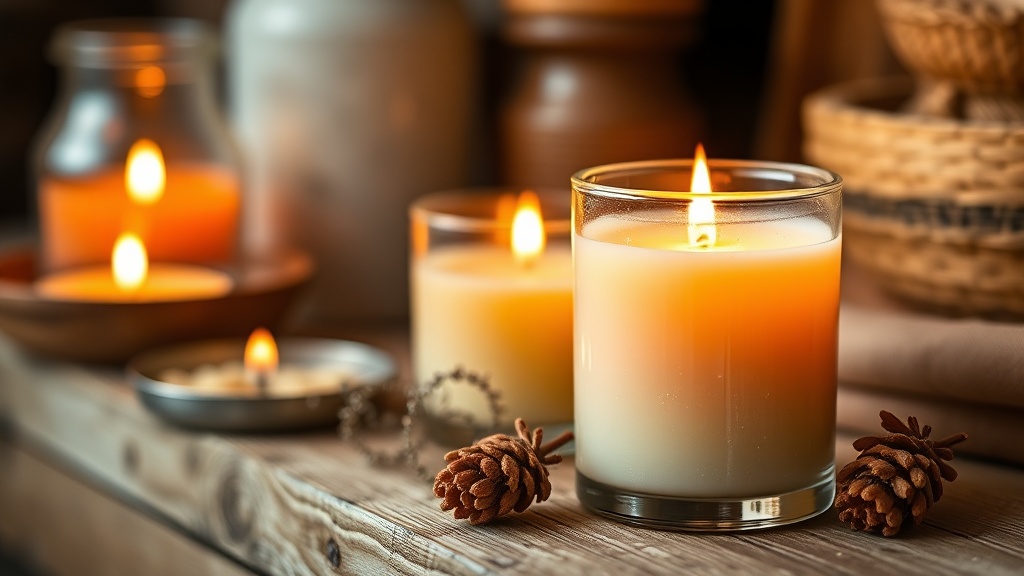
How to Make Hand-Poured Soy Candles: A Beginner's Guide to Natural Home Fragrance

What Supplies Do You Need to Start Making Soy Candles?
You'll need soy wax flakes, cotton wicks, fragrance oils, a pouring pitcher, a thermometer, and containers — roughly $50-75 for a complete starter setup. The beauty of candle making lies in its accessibility. Unlike some crafts that demand expensive equipment or years of practice, soy candle making welcomes beginners with open arms and minimal upfront investment.
Soy wax — derived from hydrogenated soybean oil — has become the go-to choice for home crafters. (Petroleum-based paraffin? That's so last decade.) Not only does soy burn cleaner and longer, but it's also renewable and biodegradable. The natural wax holds fragrance well and creates a smooth, creamy appearance that's hard to beat.
Here's what goes into a basic starter kit:
- Golden Brands 464 Soy Wax — The industry standard for container candles, known for excellent scent throw and smooth tops
- Cotton or wood wicks — CD wicks work well for soy; wooden wicks add that satisfying crackle
- Fragrance oils — CandleScience and The Flaming Candle offer beginner-friendly options
- Pouring pitcher — Aluminum or stainless steel with a spout (the CandleScience 4-pound pitcher is a solid choice)
- Candy or candle thermometer — Precision matters when you're working with wax
- Containers — Mason jars, tins, or specialty candle vessels
- Scale — Digital kitchen scales work perfectly
- Stirring utensils — Dedicated tools you won't use for food
Worth noting: Don't skimp on the thermometer. Wax temperature determines everything — scent throw, burn quality, and how the candle looks when it sets. A $10 digital thermometer saves countless ruined batches.
How Much Does It Cost to Make Candles at Home?
A single 8-ounce soy candle costs approximately $3-5 in materials versus $15-25 for comparable store-bought artisan candles. The math works heavily in your favor once you move past the initial equipment purchase. Most beginners recoup their startup costs within the first 10-12 candles.
Here's the thing about pricing — commercial candle makers mark up their products significantly to cover labor, packaging, and retail margins. When you DIY, you're trading time for savings. (And honestly? The process is half the fun.)
| Component | Cost per Candle (Approximate) |
|---|---|
| Soy wax (8 oz) | $1.20 |
| Fragrance oil (1 oz) | $0.80 |
| Container (8 oz jar) | $1.00 |
| Wick | $0.25 |
| Label/dye (optional) | $0.50 |
| Total | $3.75 |
Bulk buying changes the equation even more. A 50-pound box of Golden Brands 464 soy wax drops your per-ounce cost from roughly $0.15 to $0.08. Fragrance oils — often the priciest component — become far more economical when purchased in 16-ounce bottles rather than 1-ounce samples.
Philadelphia's local craft scene offers resources too. The Philadelphia Wholesale Produce Market area has suppliers, and several craft stores in Old City stock candle-making supplies without shipping delays.
What's the Step-by-Step Process for Making Soy Candles?
The basic process involves melting wax to 185°F, adding fragrance at 175°F, cooling to 135°F, then pouring into prepared containers — total active time runs about 30 minutes plus 24 hours cure time. Here's how to do it right from your first attempt.
Step 1: Prepare Your Workspace
Cover your work surface with newspaper or parchment paper. Wax drips happen — they're part of the craft. (Old towels work in a pinch, but you'll never get the wax out.) Set up a double boiler system: one pot of simmering water with your pouring pitcher nested inside. Never put wax directly on a heat source — it's flammable, and ruined pots are expensive to replace.
Step 2: Measure and Melt
Use your scale to measure wax. A good rule: you'll need roughly twice the volume of your container in wax flakes. An 8-ounce jar takes about 6.5 ounces of wax by weight — wax shrinks as it melts, then contracts further as it cools. Melt to 185°F, stirring occasionally. Patience matters here. Rush the melt, and you'll get inconsistent results.
Step 3: Prepare Your Containers
While wax melts, secure wicks to container bottoms using wick stickers or hot glue. Center them — off-center wicks cause uneven burning and "tunneling" where wax walls up the sides. Use wick holders (clothespins work) to keep wicks upright and centered while pouring and cooling.
Step 4: Add Fragrance
Remove melted wax from heat. At 175-185°F, add your fragrance oil. The standard ratio is 1 ounce of fragrance per pound of wax (6.25% load), though some makers push to 10% for stronger throw. Stir gently but thoroughly — about 2 minutes. Over-stirring introduces air bubbles; under-stirring leaves fragrance unbound.
Step 5: Cool and Pour
Here's where beginners often stumble. Let the wax cool to 130-135°F before pouring. Pour too hot, and you'll get sinkholes, frosting (that white, crystalline appearance), and poor adhesion to containers. Pour too cool, and the wax thickens mid-stream, creating layers and uneven tops. The sweet spot? Around 135°F.
Pour slowly into your prepared containers, leaving about half an inch of headspace. Pouring speed affects how air escapes — slow and steady prevents trapped bubbles.
Step 6: Cure and Finish
Let candles cool undisturbed at room temperature. (Don't stick them in the fridge — rapid cooling causes cracking and poor adhesion.) After 24 hours, trim wicks to ¼ inch. Then wait. The catch? Soy candles need 1-2 weeks to cure fully. Fresh-poured candles smell nice, but cured candles throw fragrance farther and burn more evenly.
How Do You Troubleshoot Common Candle-Making Problems?
Sinkholes, frosting, and poor scent throw — the three horsemen of beginner candle making — each have straightforward fixes once you understand their causes. Here's what goes wrong and how to set it right.
Sinkholes happen when wax cools unevenly, creating air pockets beneath the surface. They're nearly invisible until you cut or burn the candle. The fix? Poke relief holes after the initial pour, then top off with a second pour once the candle is fully cooled. Or — pour at the correct temperature (130-135°F) and your sinkhole problems largely disappear.
Frosting — that white, snowflake-like coating on soy candles — is purely cosmetic. (Some makers actually prize it as evidence of natural wax.) It occurs when soy wax crystallizes during cooling. Pouring at lower temperatures helps, as does heating containers slightly before pouring. But honestly? Most customers don't notice, and it doesn't affect burn quality.
Poor scent throw — when your candle smells weak hot or cold — usually traces to one of three issues: under-measured fragrance, poor quality oils, or wrong pour temperature. Use a scale, not eyeballing. Buy fragrance oils specifically formulated for candles (key oils often don't perform well in soy). And hit that 175°F fragrance addition temp consistently.
Wet spots — where wax pulls away from container sides — look like air gaps. They're cosmetic but annoying. Pre-warming containers slightly before pouring eliminates most wet spots. So does pouring at proper temperatures and cooling slowly.
Mushrooming wicks — that carbon buildup on wick tips — means your wick is too large for your container and wax combination. Size down. Conversely, tunneling (wax walls building up, drowning the wick) means your wick is too small. Wicking charts from suppliers help, but testing remains the only sure method.
Where Can You Sell Homemade Candles?
Local farmers markets, Etsy, craft fairs, and consignment shops represent the most accessible starting points for selling handmade candles — many makers earn $500-2000 monthly part-time. The craft candle market continues growing as consumers seek alternatives to mass-produced home fragrance.
Philadelphia offers excellent opportunities. The Headhouse Farmers Market draws weekend crowds. Old City and Fishtown boutiques regularly consign local crafts. And the city's active maker community — groups like the Philadelphia Craft Collective — provides support and wholesale opportunities.
Online, Etsy dominates handmade sales but charges listing fees and takes 6.5% commission. Shopify offers more control for established sellers willing to drive their own traffic. Social media marketing — particularly Instagram and Pinterest — drives most candle business discovery. Photographing candles well matters more than most beginners realize. Natural light, simple props, and consistent styling separate amateur listings from professional ones.
Packaging improves perceived value. Custom labels, branded matches, and tissue paper transform homemade into boutique. But don't over-invest early — test your products at markets first. Feedback from real customers shapes better product than guessing alone ever could.
The home fragrance market rewards authenticity. Buyers want to know who's making their candles, what goes into them, and why it matters. Your story — crafting in a Philadelphia apartment, sourcing American-grown soy, experimenting with scent blends — becomes part of the product. That's something factory-made candles can't replicate.
Start small. Test batches. Document everything. (Wax type, fragrance load, pour temp, cure time — data saves you from repeating mistakes.) And enjoy the process — there's something deeply satisfying about lighting a candle you made yourself, watching that flame dance, knowing exactly what went into creating that warm glow.
Steps
- 1
Prepare Your Workspace and Materials
- 2
Melt the Soy Wax and Add Fragrance
- 3
Pour, Cool, and Trim Your Finished Candles