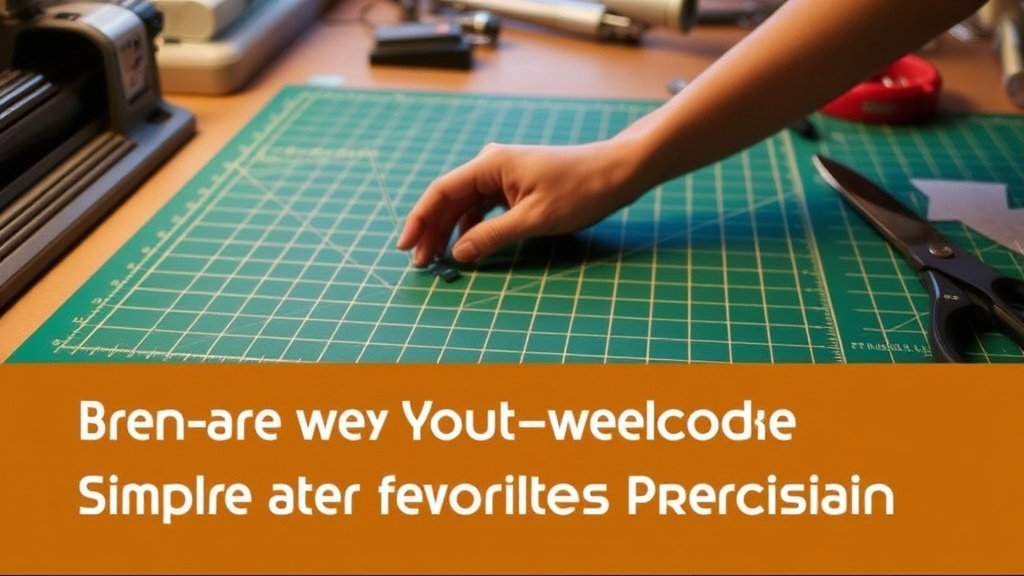
Revitalize Your Cutting Mat: Simple Steps for Lasting Precision

Did you know that a dull, grooved cutting mat can actually dull your precision blades faster? It's an often-overlooked fact, but a surface riddled with deep cuts forces your blade to work harder, leading to quicker wear and tear on your most important cutting tools. This quick tip guide will walk you through easy maintenance steps to extend the life of your self-healing cutting mat, ensuring cleaner cuts and protecting your valuable blades in the long run.
Why Does My Cutting Mat Get Grooves?
Self-healing cutting mats are engineered with a soft, pliable material—often PVC—that allows cuts to close up over time, maintaining a smooth surface. However, this magical 'self-healing' isn't infinite. Repeated cuts in the exact same spot, excessive pressure, or using overly sharp blades (like fresh rotary blades) can overwhelm the material's ability to recover. Over time, these actions create permanent channels and deep grooves that compromise your mat's flatness and cutting integrity.
How Can I Clean My Self-Healing Mat Effectively?
Regular cleaning is the simplest way to prolong your mat's usability. Begin by gently scrubbing your mat with lukewarm water and a mild dish soap—nothing abrasive. You can use a soft-bristled brush (like an old toothbrush) or a damp cloth to work away embedded paper fibers, fabric lint, and adhesive residue that accumulate in the grooves. For stubborn gunk, a plastic scraper can help, but always be gentle to avoid further damage. Rinse thoroughly and allow the mat to air dry completely, lying flat to prevent warping. Avoid direct sunlight or extreme temperatures, which can cause permanent distortion. A deeper dive into the mechanics behind these mats can explain why proper care is so important for maintaining their unique properties: