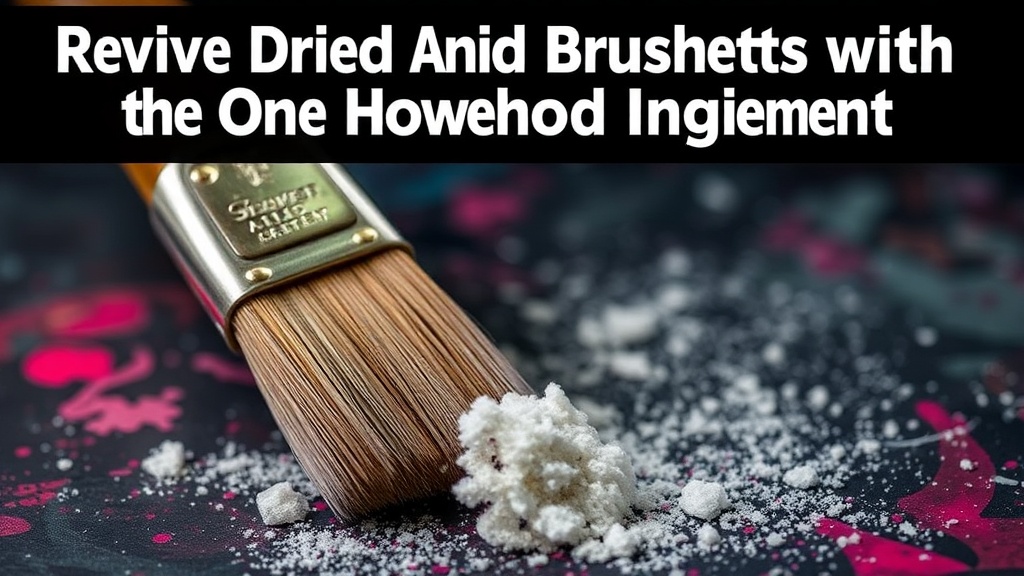
Revive Dried Acrylic Brushes with One Household Ingredient

Quick Tip
A 30-minute soak in heated white vinegar loosens dried acrylic paint and brings stiff brushes back to life.
Dried acrylic paint doesn't have to mean the end of a favorite brush. This quick tip explains how to soften hardened bristles using nothing more than white distilled vinegar — a cheap, accessible fix that saves money and keeps quality brushes out of the trash can. Whether the brush is a budget synthetic flat or a prized natural-hair round, the method works the same way.
Can you save a paintbrush with dried acrylic paint?
Yes — provided the bristles haven't fused into a solid, immovable block, there's a good chance the brush can be brought back to working condition. Acrylic paint is water-soluble when wet, but once it dries, it transforms into a waterproof polymer. That said, an acid soak breaks down the cured paint film and loosens the bristles without attacking the glue inside the metal ferrule. The sooner you act, the better the results — a brush left crusty for six months is riskier than one forgotten for a weekend.
What household ingredient restores stiff paintbrushes?
White distilled vinegar is the single most effective kitchen-cabinet solution for this exact problem. The acetic acid weakens the bond between the acrylic polymer and the synthetic or natural bristles. (Heinz or any store-brand vinegar works perfectly — there's no need to buy organic, raw, or specialty varieties.) Pour enough vinegar into a glass jar to cover the bristles completely, then let the brush soak for 30 minutes to an hour. You'll notice the bristles starting to bend again as the paint softens. If the buildup is especially stubborn, a second soak followed by gentle combing with a Jack Richeson wire brush cleaning tool usually does the trick.
| Method | Best For | Approximate Cost | Time Required |
|---|---|---|---|
| White distilled vinegar soak | Dried acrylic on synthetic or natural bristles | $2–$4 | 30–60 minutes |
| Murphy's Oil Soap | General brush maintenance, latex paint | $5–$7 | Overnight |
| Winsor & Newton Brush Cleaner & Restorer | Heavy-duty acrylic or oil buildup | $12–$15 | Up to 24 hours |
How do you finish cleaning a brush after vinegar?
After the vinegar soak, rinse the brush thoroughly under warm running water and work in a small drop of Dawn dish soap to remove any lingering vinegar smell and remaining paint particles. Reshape the bristles with your fingers and lay the brush flat on a towel to dry — standing it upright lets water pool in the ferrule and loosen the glue over time. For brushes with a price tag like a Winsor & Newton Series 7 Kolinsky, this extra care is well worth the two minutes.
Worth noting: vinegar won't rescue brushes where the paint has dried all the way up into the metal ferrule. The acid can't reach deep enough to dissolve paint locked behind crimped metal. Here's the thing — prevention still beats any restoration trick. Rinse brushes in water immediately after a painting session, especially when working with fast-drying brands like Liquitex Basics, and they'll stay supple for years.